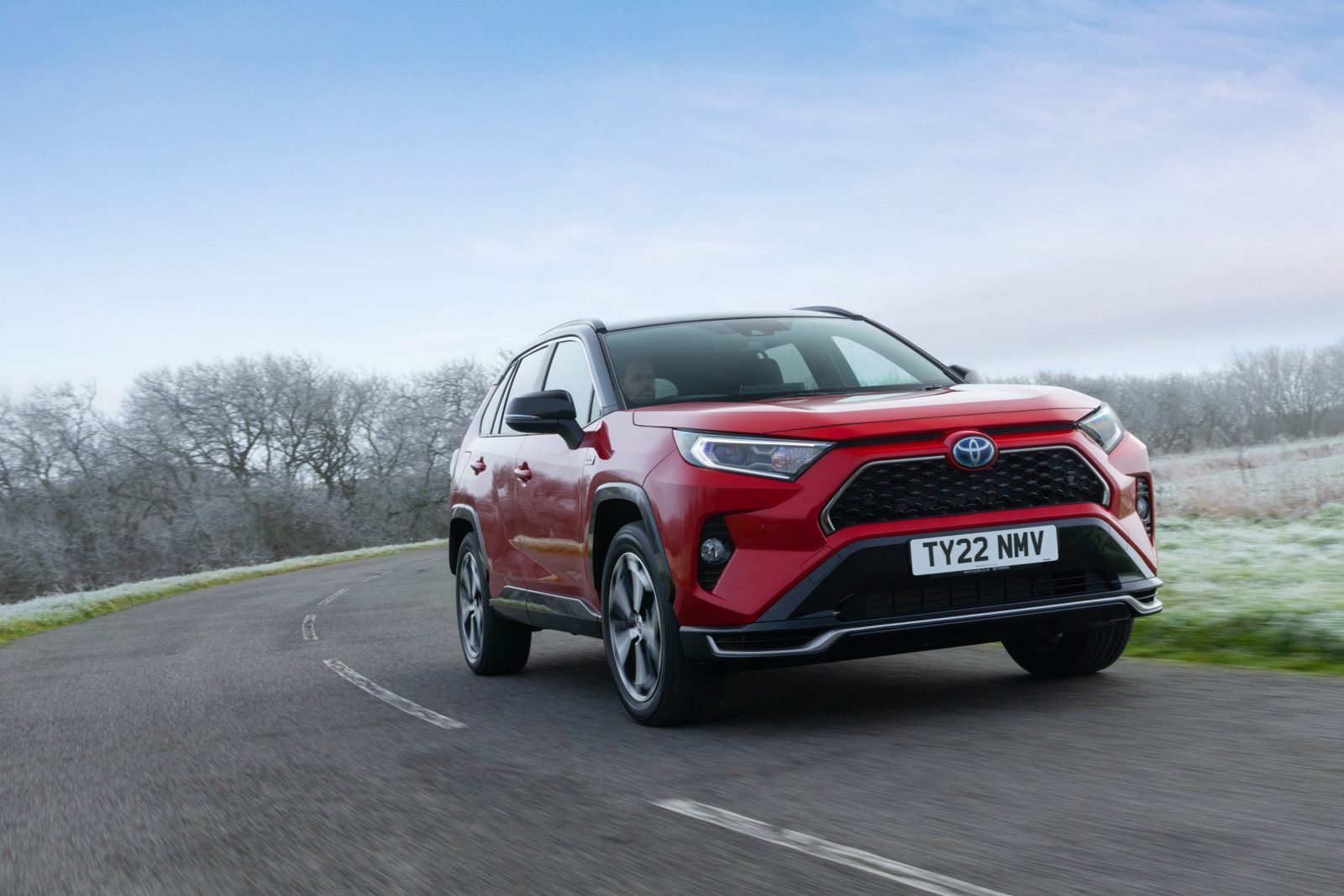
In a previous article we provided tips on maximising fuel economy in Toyota’s range of self-charging hybrids. This article offers advice on how RAV4 Plug-in Hybrid fuel efficiency might be improved with some careful and considered driving.
First, let’s look at how the SUV’s plug-in hybrid powertrain works, and how it differs from those found in Toyota’s range of self-charging hybrids.
Cars such as Corolla Hybrid, Toyota C-HR and RAV4 Hybrid pair petrol engines with compact electric motors to provide a mix of limited electric-only running or a combination of petrol-electric or petrol-only power. The electric motor’s battery is charged on the go, by the petrol engine and via regenerative braking.
Things are different in RAV4 Plug-in Hybrid, which combines a 2.5-litre motor, a larger EV battery and two electric motors (one on each axle) to produce extra drive power. Significantly, this system also offers the ability to cover greater distances and run at higher speeds in ‘EV mode’ compared with RAV4 Hybrid.
Maximum output for the full powertrain is 302bhp, which is 38% more than the standard RAV4 Hybrid. This equates to a 0-62mph time of six seconds (2.1 seconds faster than the RAV4 Hybrid) and more accessible power for improved driveability. In fact, there is now 50% more power available when accelerating out of urban zones.
To find out more about RAV4 Plug-in Hybrid, including fuel economy and emissions information, please click here.
RAV4 Plug-in Hybrid can operate as an authentic electric vehicle: with pure EV running as its default mode where it can cover up to 61 miles in urban driving (WLTP city cycle) on a full battery charge, and 46 miles in mixed (WLTP combined cycle) driving, comfortably more than the average European daily commute, with no intervention from the hybrid powertrain.
Further flexibility is built into the technology to allow the driver to choose to start the journey in hybrid (HV) rather than EV mode. For example, this would allow the driver to maximise efficiency…
Read Full Article Source