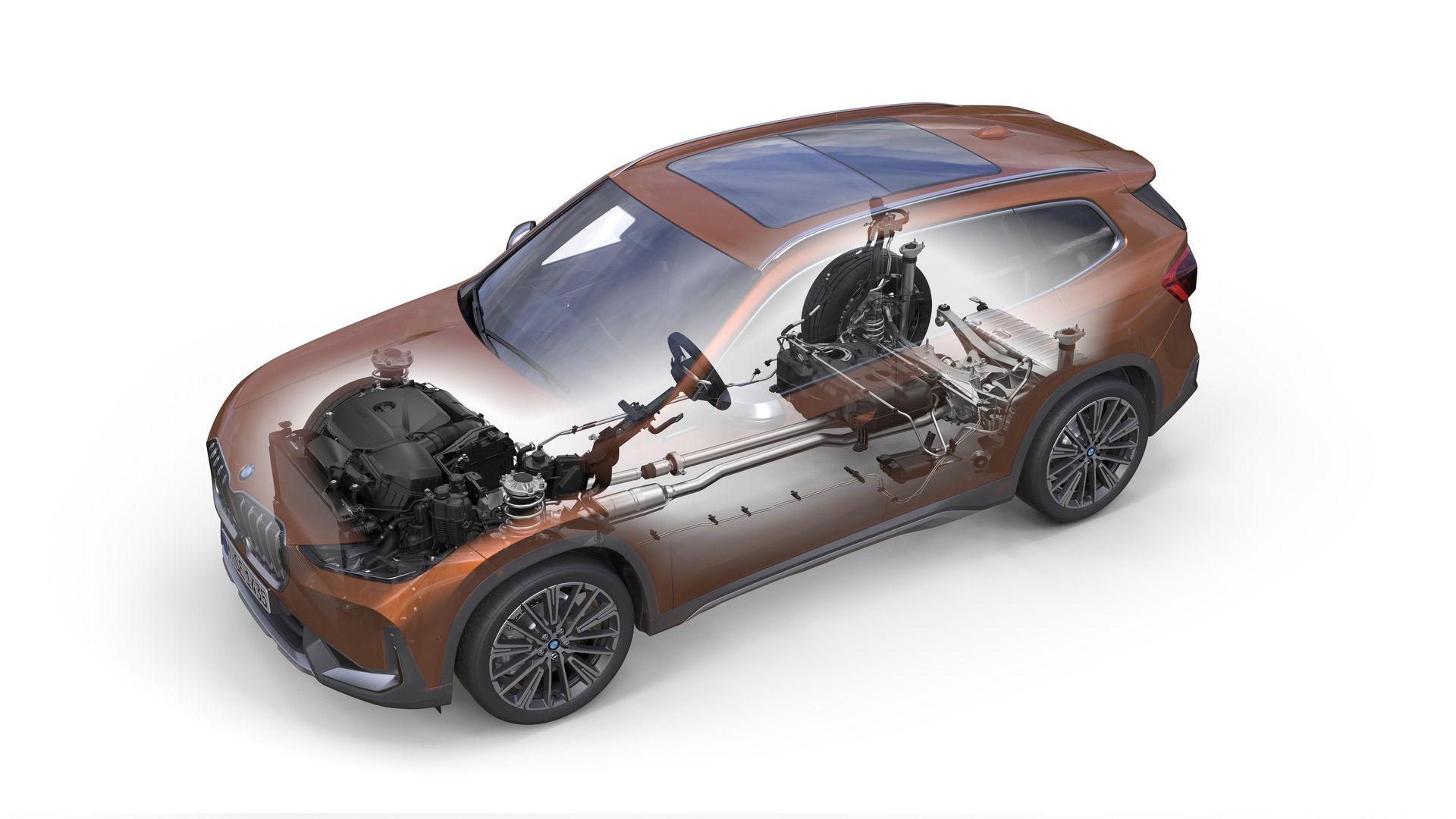
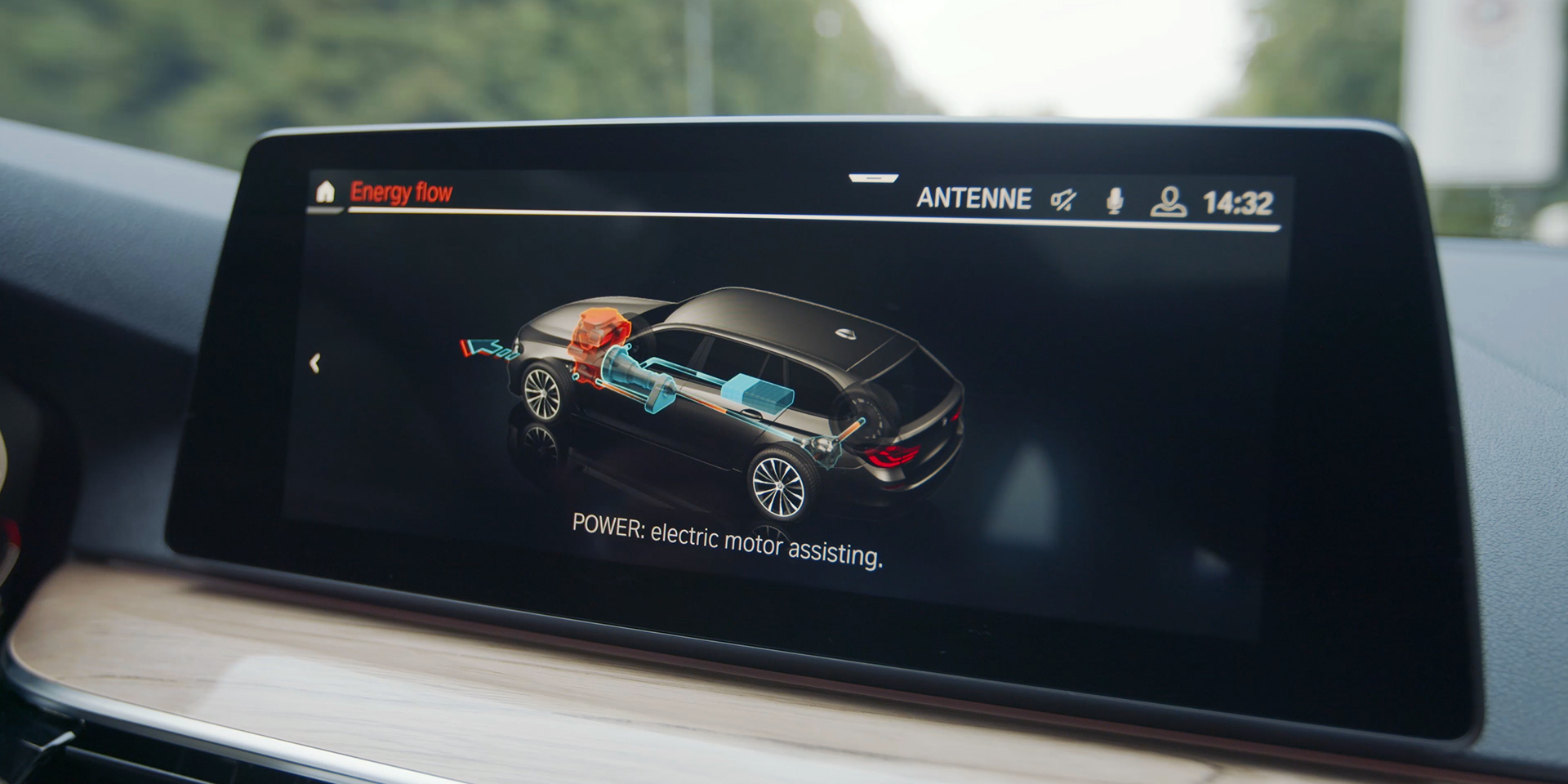
Since around 2019, BMW has joined other automakers like Audi and Mercedes-Benz in marketing some of their vehicles as “mild-hybrids”. A mild-hybrid is a vehicle that uses some sort of electric aid parallel to the engine, usually while coasting or facilitating automatic start/stop. But by definition, a mild-hybrid cannot use this system independent of the internal combustion engine. It’s designed to be seamless; most people will drive a good mild-hybrid vehicle without even realizing the system is there.
Of course, there are lots of additional positives to a mild-hybrid system. One of the most well-publicized is BMW’s introduction of the “eBoost” function. eBoost promises additional horsepower with zero lag, facilitated by the 48-volt power distributor and the starter motor. Ultimately, BMW’s novel 48-volt system is doing a lot behind the scenes – and deserves a deeper dive.
How BMW eBoost Works
The eBoost function is simple: when called for and available, the starter motor generator briefly supplies additional power. It supports the engine only in times where peak torque is not yet available. Usually, this is because the turbocharger is still in the process of “spooling up”. Only during launch control will the eBoost system work in tandem with a fully-spooled turbocharger – this is called “eOverboost”.
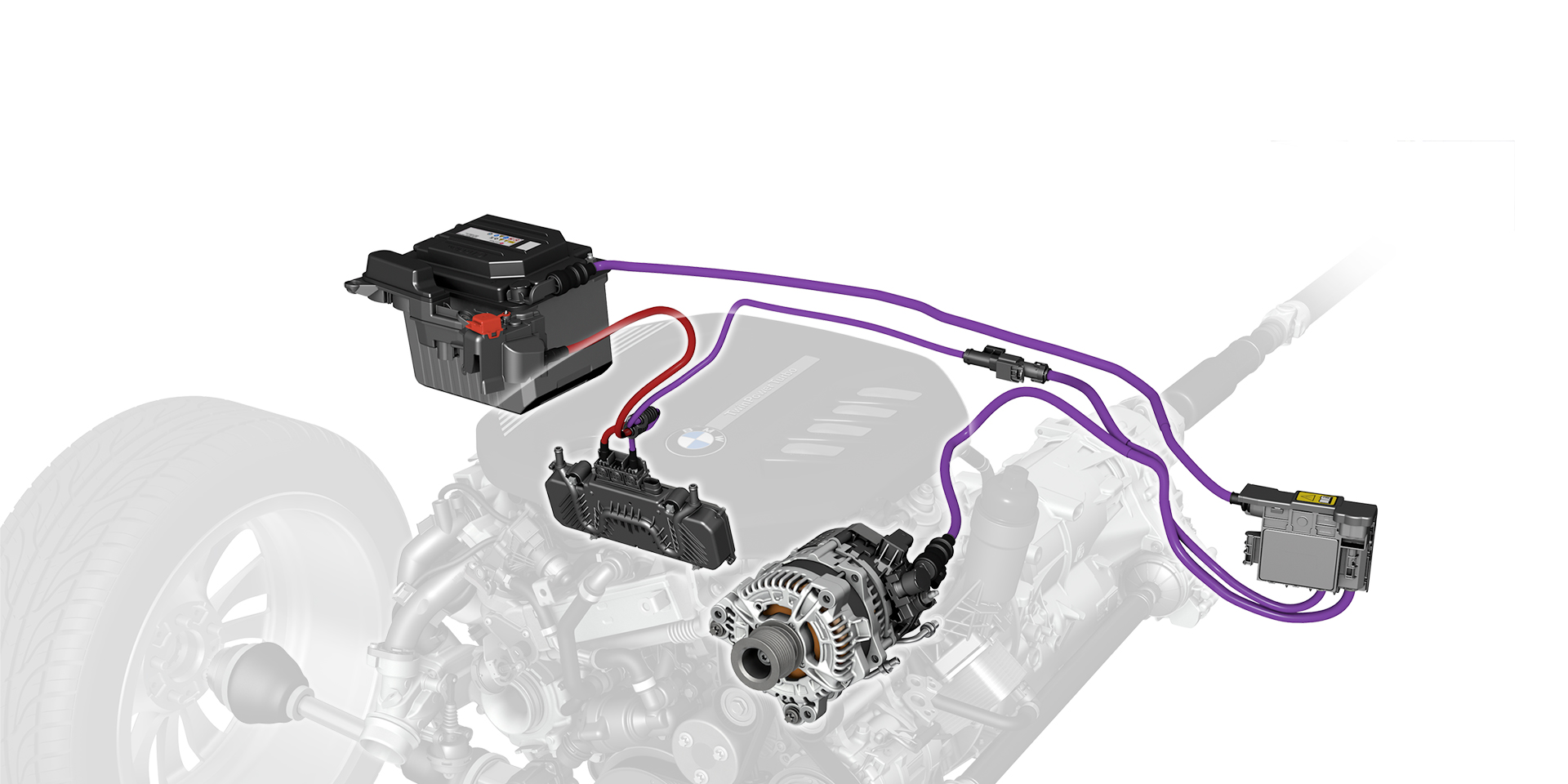
eBoost and eOverboost are only possible because of the starter motor generator’s clever location. It’s integrated into the belt drive of the engine. Therefore, by using reserve power from a lithium-ion battery, the generator powers the drive belt. And the essential components responsible are surprisingly quite simple: the generator, a lithium-ion battery, and a DC/DC converter.
Components of the 48-Volt System
The generator’s duties change depending on driving conditions and it essentially has two different states: “generator” mode and “engine” mode. Generator mode allows for the generator to convert mechanical power from the belt drive into electrical power to help the traditional 12-volt electrical system. Engine mode focuses on supplying mechanical power to the engine via the belt drive.
The lithium-ion battery has an obvious use: storing power for use by the generator. It’s stored in the engine compartment, at the rear right. The…
Source