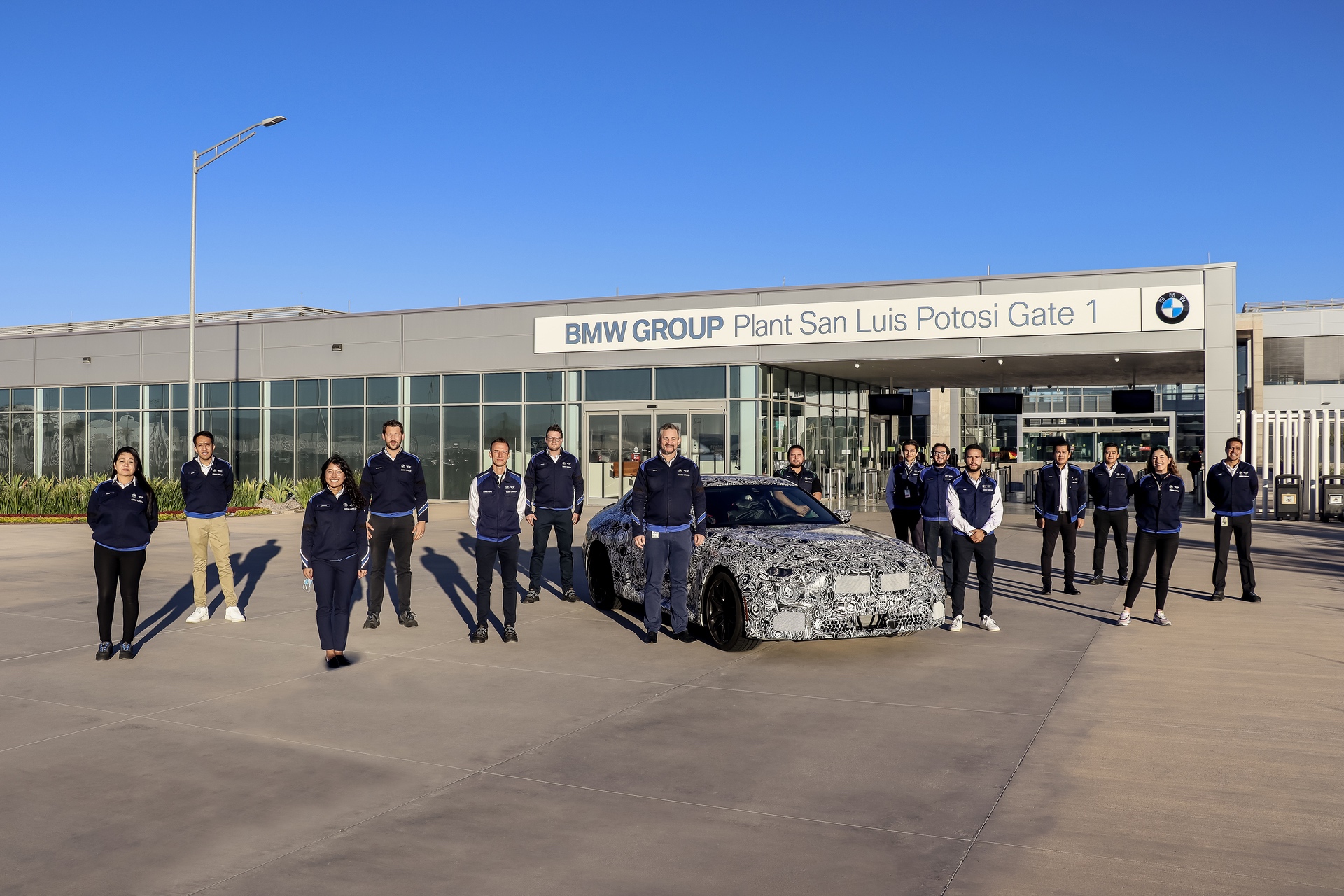
When BMW first opened the San Luis Potosi, Mexico plant in 2019, it likely didn’t realize how important it might become in the future. BMW obviously had big plans for it, otherwise it wouldn’t have built it. However, there’s no way BMW could have predicted the electric vehicle climate of today, back then. Now, the SLP plant might become one of the most important of all BMW’s plants and the new Inflation Reduction Act President Joe Biden just signed into law has a lot to do with it.
Inflation Reduction Act Comes With New EV Rules
As part of the new IRA, the U.S. federal tax credits that previously applied to EVs are now gone for many vehicles. One of the new qualifications for that $7,500 EV tax credit is that final assembly of the vehicle must occur in North America. As part of the IRA, that includes the U.S., Canada, and Mexico. At the moment, none of BMW’s EVs are assembled in North America but, if BMW wants to get a bit more serious about selling EVs in the ‘States, it could shift some of its EV production to SLP. That would allow them to meet the production qualification of the IRA.
“A number of factors will determine whether a vehicle/customer is eligible to receive the tax credit contained in the IRA. Firstly, the “final assembly” of the vehicle must occur “within North America,” i.e., the U.S., Mexico, or Canada.” said Sebastian Mackensen, President and CEO of BMW North America, in a letter to BMW dealers.
BMW M2 at SLP
Of course, there are other requirements in the IRA BMW’s vehicles. For instance, electric cars (sedans, wagons, coupes, etc.) must be under $55,000, while SUVs need to be under $80,000. That counts the BMW iX SUV out, as it starts at over $80,000 but BMW did just reveal a new i4 eDrive35, which squeaks just under that $55k mark. Future BMW EVs, such as the next-gen i3 and iX3, could also sneak under those price points as well. So if BMW can get them under those prices, and build them in Mexico, they’ll be eligible for tax credits.
Would BMW go through all of that trouble for tax credits? Probably. That $7,500 tax credit is a huge reason why…
Source