Now that the new G82 M2 is here, all F87 M2 owners are going to be asking themselves whether they should trade their car in. Is this new M2 worth upgrading to? Obviously, I can’t answer that question for everyone. However, I can provide some insight as to what about the new M2 is likely to be an upgrade and what isn’t. So let’s take a look at the pros and cons of the new BMW M2 versus its beloved predecessor.
Engine
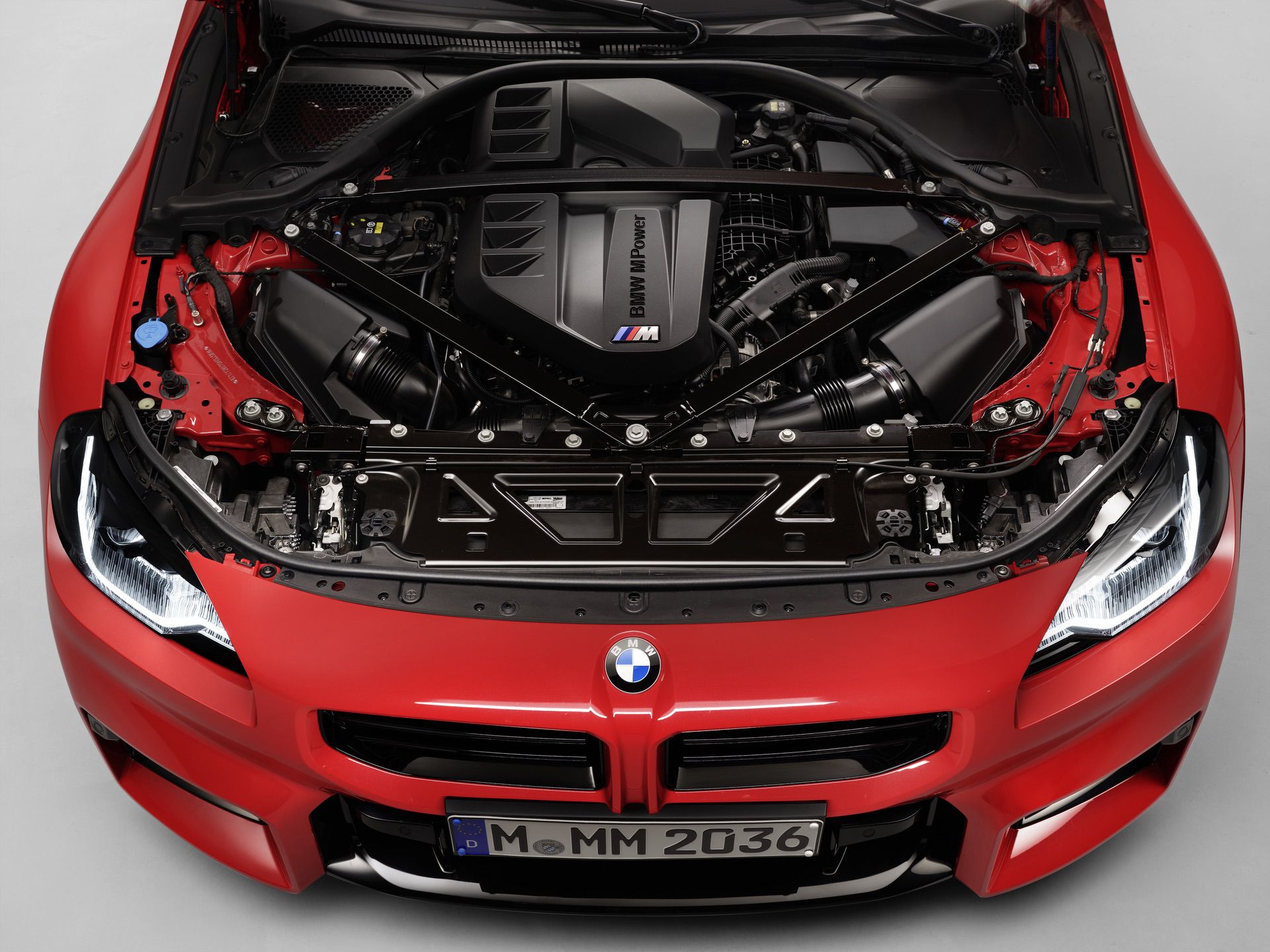
It has to start under the hood. We are talking about a brand that has “motor” in its name. The new BMW M2 uses the brand’s latest S58 engine, the same basic engine that powers the M3, M4, X3 M, and X4 M. For M2-duty, it’s been detuned a bit. Its 453 horsepower is 20 horses shy of the M3’s 473 horsepower but the M2 isn’t much lighter, so it’s going to be a bit slower. However, that S58 engine is, without question, a better engine than any of the F87’s engines.
When the G87 M2 first launched, it used an N55 3.0-liter single-turbo I6 with 365 horsepower but it wasn’t a proper M engine. Then, the M2 Competition replaced that car and its engine, switching to an S55 3.0-liter twin-turbo I6, with 406 horsepower. In the top-spec M2 CS, power was bumped to 444 horsepower.
That means this new M2 isn’t that much more powerful than the M2 CS but it is quite a bit more potent than the other two F87s. Power, though, doesn’t tell the whole story. The new S58 is just a far better engine. It makes its power in a more linear fashion, it’s smoother, it stays cooler, it’s more efficient, and—perhaps most importantly—it makes a better noise (even if it still doesn’t have a great exhaust note). So if you’re looking for an engine upgrade, the new G87 is certainly going to do that for you.
Transmissions
Like the F87, the G87 BMW M2 has two transmission options: a manual and an automatic. Unlike the F87, the automatic is an eight-speed ZF automatic. The older car used a seven-speed dual-clutch, which not only shifts faster but has far more character. Everything from its rapid-fire shift speed to its funny little shift lever made it…
Source