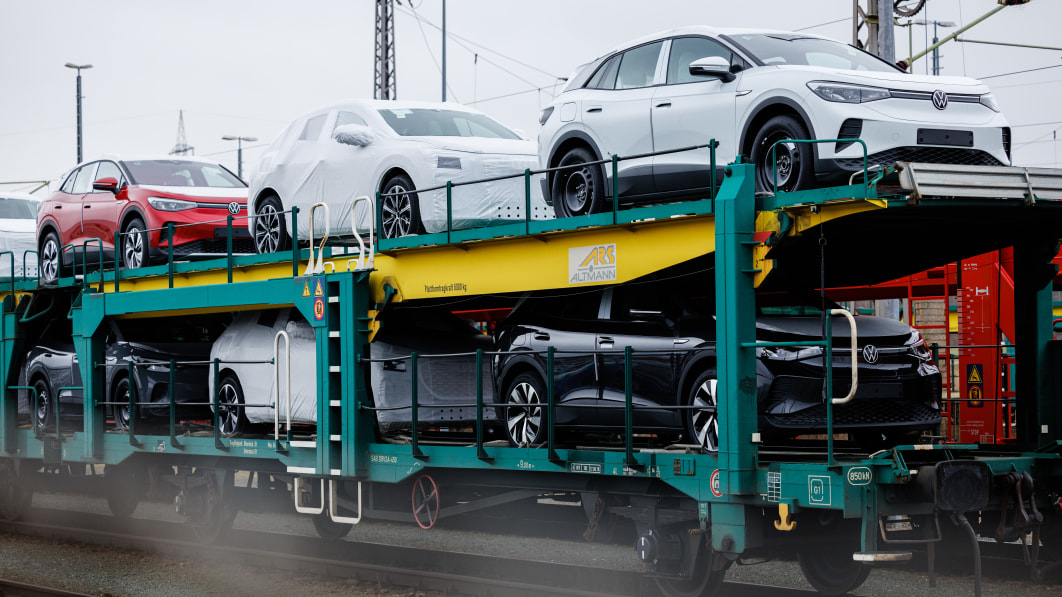
Germany for decades led on well-engineered combustion cars. It’s now facing a watershed year in the quest to retain an edge in the age of electric vehicles.
Europe’s biggest economy is under growing pressure to retool dozens of fossil fuel-era factories employing tens of thousands of workers in a race for clean-technology leadership with the US and China. Volkswagen, Mercedes-Benz and BMW are rolling out several new battery-powered models in the coming months that will be pivotal to proving they can finally start to narrow the gap to Tesla and China’s BYD, the two clear leaders in EV sales. At stake is nothing less than Germany’s future as a global industrial powerhouse.
The task looks more complicated than ever. The war in Ukraine has whipsawed energy prices in Germany, which had to turn its Russia-reliant energy policy on a dime. China, which is emerging from lockdowns, has built a sizable lead processing the raw materials underpinning the EV revolution. Its homegrown carmakers — propped up with huge sums of state support — are now expanding in Europe.
The latest threat has cropped up in the US, where President Joe Biden is luring EV suppliers with $370 billion worth of clean-technology subsidies in the Inflation Reduction Act. Tax credits incentivizing the assembly of battery cells and packs are so generous that the US has the potential to become the most profitable location in the world for production, UBS analysts said last year.
Calls on Germany and the European Union to respond in kind are getting louder by the day. The threat posed by the IRA has been a recurring topic in talks at the World Economic Forum’s annual gathering in Davos this week, with several European leaders demanding more aggressive subsidies at home. They’re unhappy about the US’s approach, which they say favors American firms and puts their EU rivals at a disadvantage.
Interestingly, Chancellor Olaf Scholz hasn’t complained much, despite having as much to lose as anyone. The automotive industry employs around 786,000 people in Germany and is the country’s biggest in terms of investments, sales and exports. Any setbacks for the nation’s carmakers and their suppliers would reverberate throughout the wider German economy.
In an interview with Bloomberg News Editor-in-Chief John Micklethwait this week, Scholz struck a conciliatory tone, saying his government appreciates and broadly supports what Biden is trying to achieve, and is “working very hard to avoid” a trade war. That’s understandable, given Germany’s reliance on exports. But the consequences of missteps remain — just ask the…
Read Full Article Source