Mr Kaikaris, why is car sharing so popular in the Baltic states?
People are increasingly questioning car ownership and the associated maintenance costs, especially in light of rising inflation. Some city dwellers have therefore decided against owning a car and opt for mobility solutions such as car sharing or car subscription services instead, while others combine the two.
What is the typical customer profile?
Our customers are city dwellers of different ages for whom convenience and flexibility are particularly important. They tend to use car sharing services for short trips, to get from A to B quickly – especially when there are stops between A and B, such as shopping. However, we are also seeing an increase in longer journeys, so we have introduced travel packages. These allow our customers to see how much they will have to spend on a planned longer journey in advance. Customers then know when they buy the package how long and how far they can travel for a fixed amount.
What is the composition of your fleet?
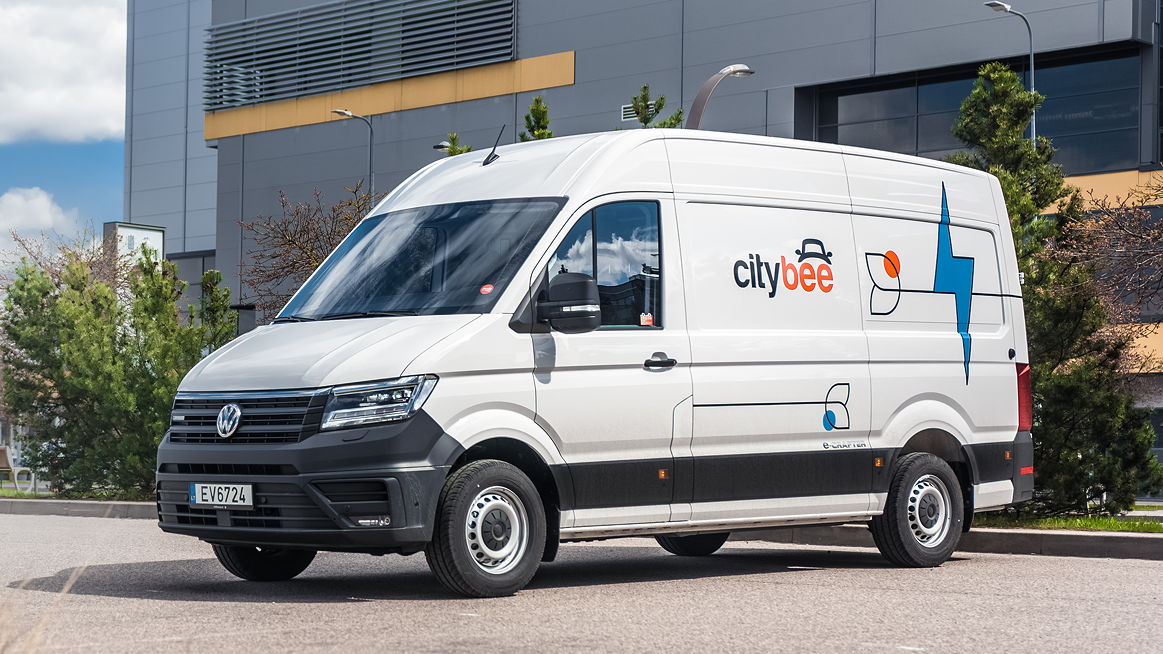
We offer a wide range of different car models in our fleet to meet our customers’ needs – from compact to premium cars. From Volkswagen, we currently offer the Taigo, Golf 8, T-Cross and T-Roc, Crafter, and the eCrafter, which plays an important role in our fleet. It was the first electric commercial vehicle model to be added to CityBee’s fleet and has established itself well. Our customers use it especially for inner-city transport, such as removals. We are seeing that more and more customers are choosing electric when they need a commercial vehicle.
Our customers, like most Lithuanians, are very familiar with Volkswagen. They have great confidence in the brand and know they are getting a quality car. I could say that for Lithuanians, Volkswagen is the standard for a good car.
Kristijonas Kaikaris CEO CityBee
Keyword eCrafter: CityBee has also been humming electrically since 2021. How high is the share of electric vehicles in your fleet?
Electric cars currently make up quite a small portion of our fleet. However, electrification is one of our strategic goals. Our aim is to have a fully electric car fleet by 2030. To achieve this, we need appropriate infrastructure in all markets where we are active – currently Estonia, Latvia, and Lithuania – so we cannot get there very quickly.
How is the public charging infrastructure…
Read Full Article Source